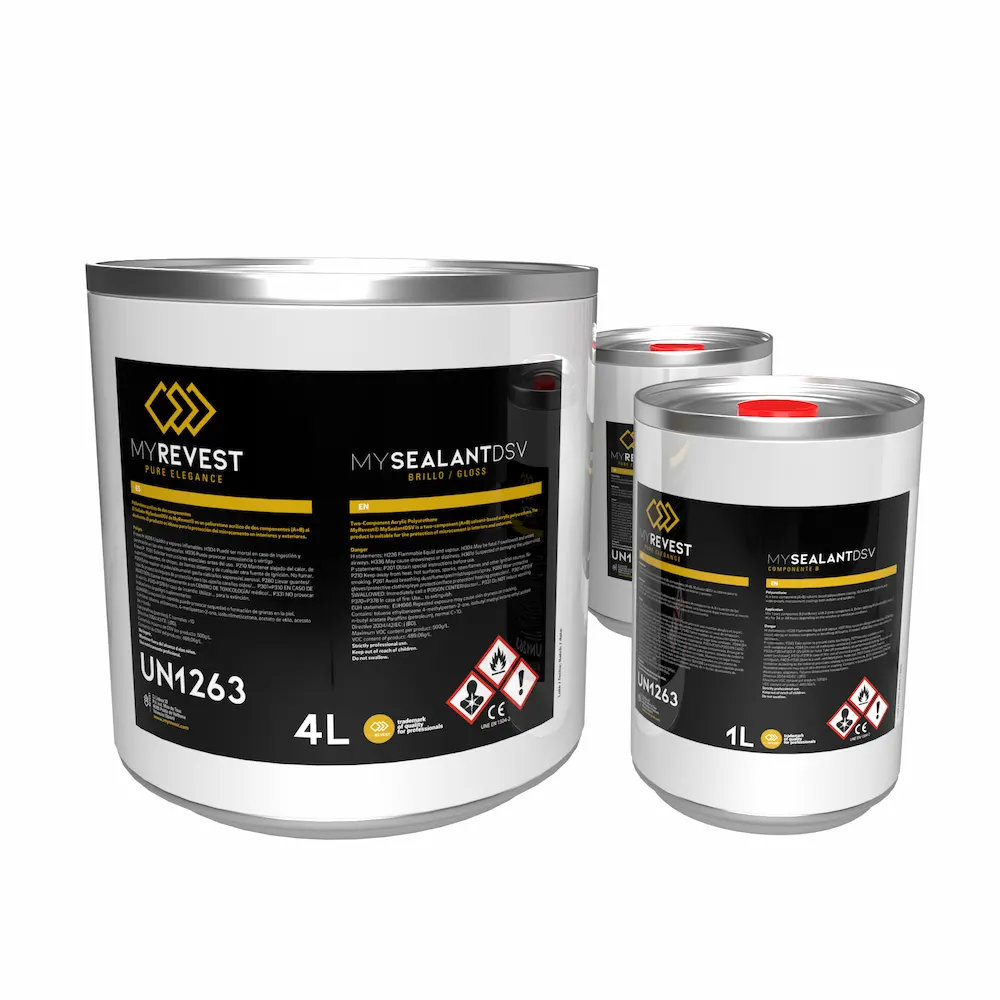
Surface Preparation: Before applying the ZenSealant DSV coating, it is mandatory to ensure the substrate is completely dry and free of dust. Before applying the polyurethane layer over microcement, allow the surface to rest for 24 to 48 hours, depending on climatic conditions and the ventilation of the workspace.
First Coat Application: Once everything is ready, apply the mixture using a short-nap velour roller or a spray gun. Ensure the ambient temperature during application is between 10°C and 30°C.
Sanding and Second Coat:
After the first coat, use 400-grit sandpaper to lightly sand the surface.
After sanding, wait a minimum of 8 hours and a maximum of 2 days to apply the second coat.
Note for Old Surfaces: If applying to an existing surface, ensure all traces of grease, oil, dust, etc., are completely removed.
Adhesion Test: Finally, as a precautionary measure, test the product’s adhesion on a small corner of the surface. Only proceed to seal the entire area once you have verified effective adhesion.